Ayano Elson: Control
Miya Shaffer, Impulse Magazine
Miya Shaffer, Impulse Magazine
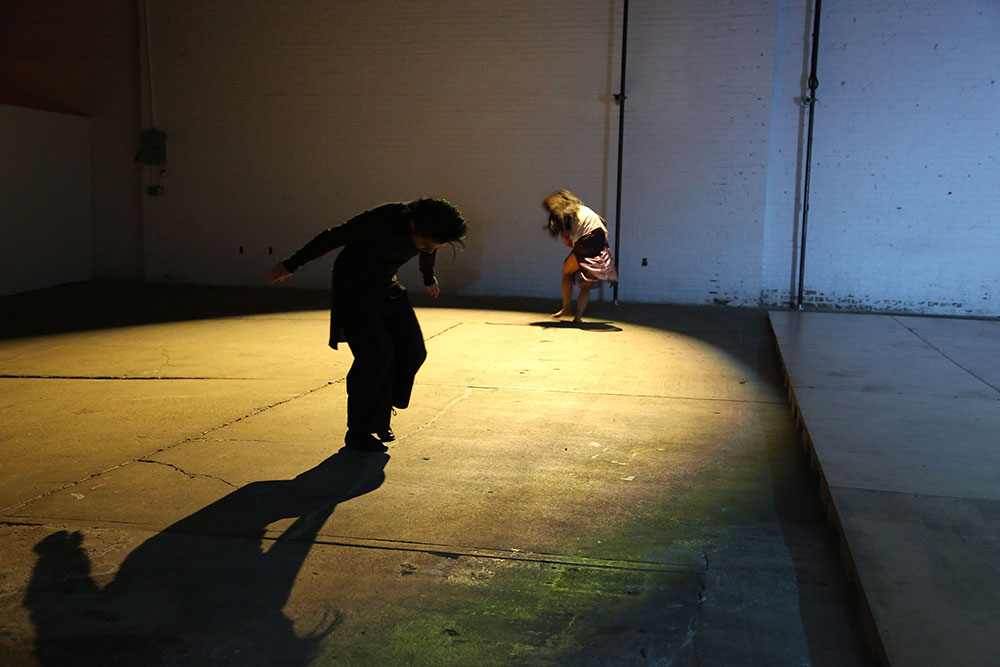
In Ayano Elson’s Control, a minimal exterior scaffolds a sensuous core. The four dancers (Cayleen Del Rosario, Amelia Heintzelman, Owen Prum, and evan ray suzuki) cycle through repeated movements that are simple, often minute, and restrained. We, the audience, can feel a psychic intensity in each sequence—an impulse, ticking beneath the dancing body’s surface, that intuits and responds to its co-presence with performance space and performing peers.
Commissioned by The Chocolate Factory Theater in Queens, Control is a performance that asks us to linger; to stay with its four performers and understand what they create in their interactions, however subtle. An entirely engrossing work, Control activates an aesthetic formalism to stake an intellectual grip on its audience. The dancers mostly perform as individuals, exploring abstract postures or ordinary actions like crawling, lunging, hopping on two feet, reclining seated, and lying sideways on the floor. But when we stay with each performer, we begin to see their uniqueness. They become characters that, through Elson’s perceptive arrangement, physicalize their own histories and desires, shared intimately (although often ambiguously) with others.
The dance begins with Del Rosario and Heintzelman almost nose-to-nose, as Heintzelman lifts Del Rosario’s arm towards the ceiling. This brief physical touch disperses into the comings and goings of all four dancers, who explore space and time as compressed and dilated. They travel far onto the concrete surrounding the stage floor, with pacing varied yet continuously disciplined. Throughout, each dancer holds a gaze that prompts intrigue, as though the object of their sight remains permanently out of the audience’s view. When athleticism builds, and bodies begin to distort the typical organization of their movement, we can sense that a clear logic still informs how the dancers relate. Live music, composed by Matt Evans and performed by Evans, isa crespo pardo, and David Leon, is a vital collaborator in this world.
A major feat in Elson’s work is her ability to formally distill the complex research for Control, which she identifies as “American postmodern dance, postwar slow cinema from East Asia, and Okinawan performance lineages.” Unexpected intimacies of aesthetic and imperial histories unfold in these references. Elson complicates the “neutral” postmodern dance body previously associated with a separation of “dancer” from systems of power, a blank canvas scrubbed of race and sexuality, for example. Instead, this dancer becomes deeply specific. Turning to Okinawa, where Elson was born, also puts these later-twentieth-century dance histories into broader conversation with parallel timelines of US militarism and the afterlives of war. Research sources like photography books by Keizo Kitajima and Mao Ishikawa depict scenes of differing intimacies between the Okinawans and US soldiers who exist on the archipelago, invoking an understanding of intimacy as necessarily entangled with asymmetries of nation, race, gender, and desire. In Control, we surface a similar sensation: a presence and co-presence of bodies skimming towards collision.
— Miya Shaffer, Impulse Magazine